Espionage Case Involving Senior Official Aide Overturned, Criticized for Double Standards
China Times Opinion, June 26, 2026
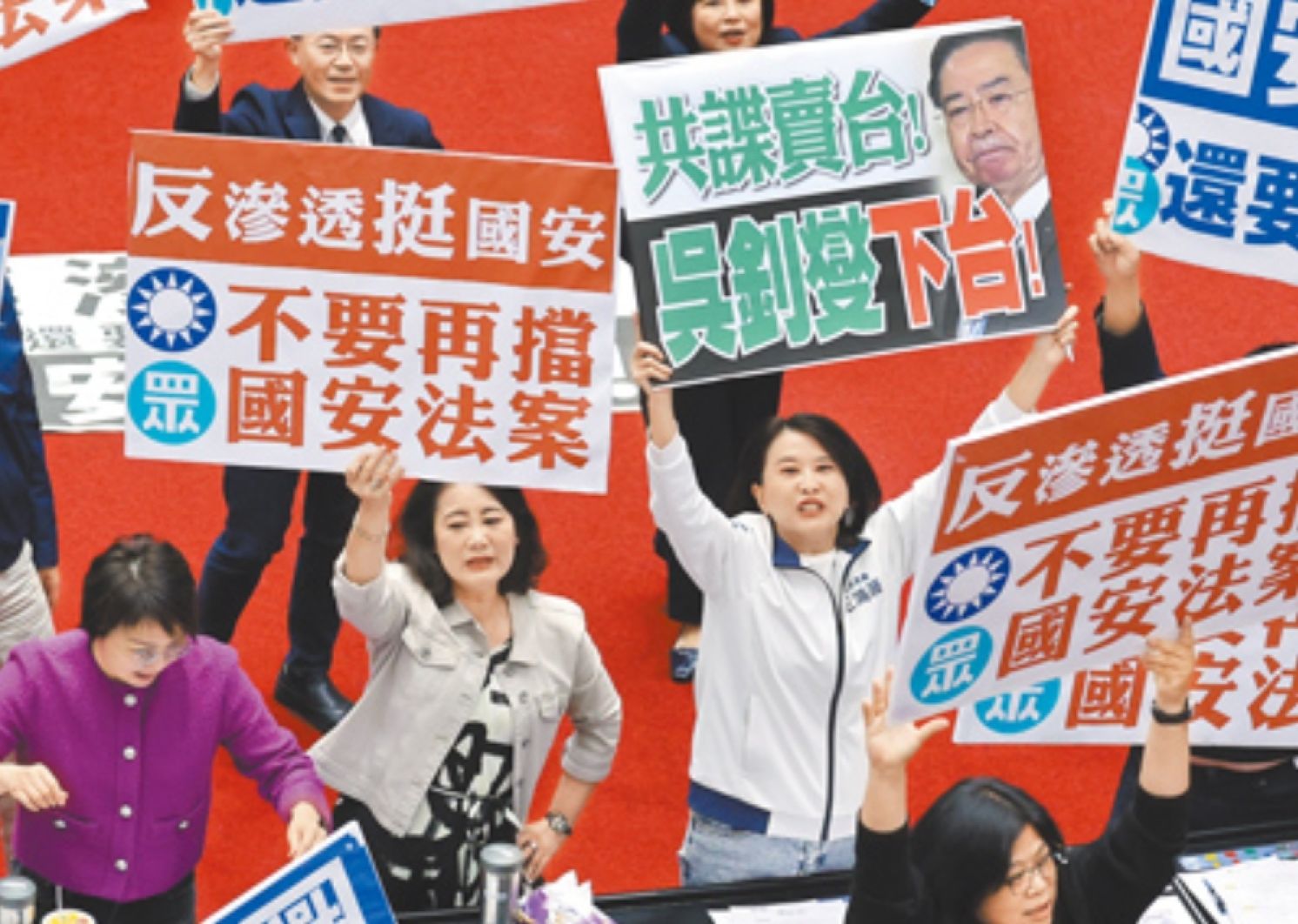
On June 25, the Taiwan High Court issued its second-instance ruling in the espionage case involving former Democratic Progressive Party (DPP) staff members accused of spying for mainland China. All defendants who had received heavy sentences in the first trial were given lighter judgments on appeal. Among them, Ho Jen-chieh, an assistant to current then-Minister of Foreign Affairs Joseph Wu, saw Ho’s original sentence of eight years and two months overturned and was found not guilty. In contrast, Taitung County Executive Yao Ching-ling was investigated at the request of the Mainland Affairs Council merely for promoting agricultural products to the mainland through a prerecorded video. Likewise, local figures outside the DPP who travel to the mainland for exchanges or accept hospitality are often subjected to investigation by prosecutors and law enforcement authorities. It is therefore unsurprising that critics have accused the DPP administration of targeting the Kuomintang (KMT) while sparing the DPP and applying double standards in the judicial system.
The most significant issue in the DPP espionage cases is not merely that the defendants had DPP-related backgrounds, but that the allegations involved highly sensitive national security matters, including state secrets and the schedules of the president and vice president. By comparison, Ms. Yao simply used a prerecorded video at the Straits Forum to speak on behalf of Taitung’s atemoya farmers and agricultural interests, yet the Mainland Affairs Council immediately deemed the action potentially in violation of the Act Governing Relations Between the People of the Taiwan Area and the Mainland Area and requested that the Ministry of the Interior conduct an investigation. Organizations such as the Nantou County Farmers’ Association and the Hualien County Farmers’ Association were also singled out for investigation after signing letters of intent for agricultural and fisheries cooperation at the Straits Forum.
The DPP administration has defined the Straits Forum as a united front platform. Therefore, even activities such as marketing agricultural products or seeking orders must undergo administrative scrutiny. If that is the standard, then should the DPP not apply an even higher standard to individuals from its own camp who were found in the first trial to have leaked confidential information to mainland Chinese intelligence agencies? Yet throughout the entire process, neither President Lai Ching-te, who also serves as chairman of the DPP, nor Mr. Wu, now secretary-general of the National Security Council whose subordinate was implicated in the case, has stepped forward to provide an explanation. Even if they do not interfere with judicial proceedings, both have a responsibility to offer the public a more complete account regarding failures in personnel oversight, vulnerabilities in national security controls, and the risk of infiltration within the party.
Furthermore, in recent years, numerous local figures outside the DPP or associated with KMT supporters have faced scrutiny whenever they were involved in visits to China, accepted hospitality, participated in exchanges, or were accused of having contact with China’s united front system. Village chiefs, hometown associations, pro-KMT organizations, and local government leaders have all been summoned, searched, released on bail, or subjected to administrative investigations. If the DPP government argues that these measures are necessary for national security, then it must establish standards that are consistent, transparent, and predictable, rather than creating the impression that “KMT exchanges are labeled as united front activities, while DPP involvement in confidential matters is downplayed.”
Although the judiciary may overturn convictions on the basis of insufficient evidence, the ruling party cannot use that as an excuse to avoid providing explanations. Courts may impose sentences according to law, but the government cannot apply entirely different standards when dealing with individuals from different political parties or backgrounds. What truly damages the DPP’s narrative of “resisting China and protecting Taiwan” is not only that members of its own camp have been implicated in espionage cases, but also that it remains silent when its own members are involved while treating opposition figures with exceptional severity. It is this discrepancy that has given rise to accusations of double standards and unequal treatment by the DPP.
From: https://www.chinatimes.com/newspapers/20260626000528-260121?chdtv